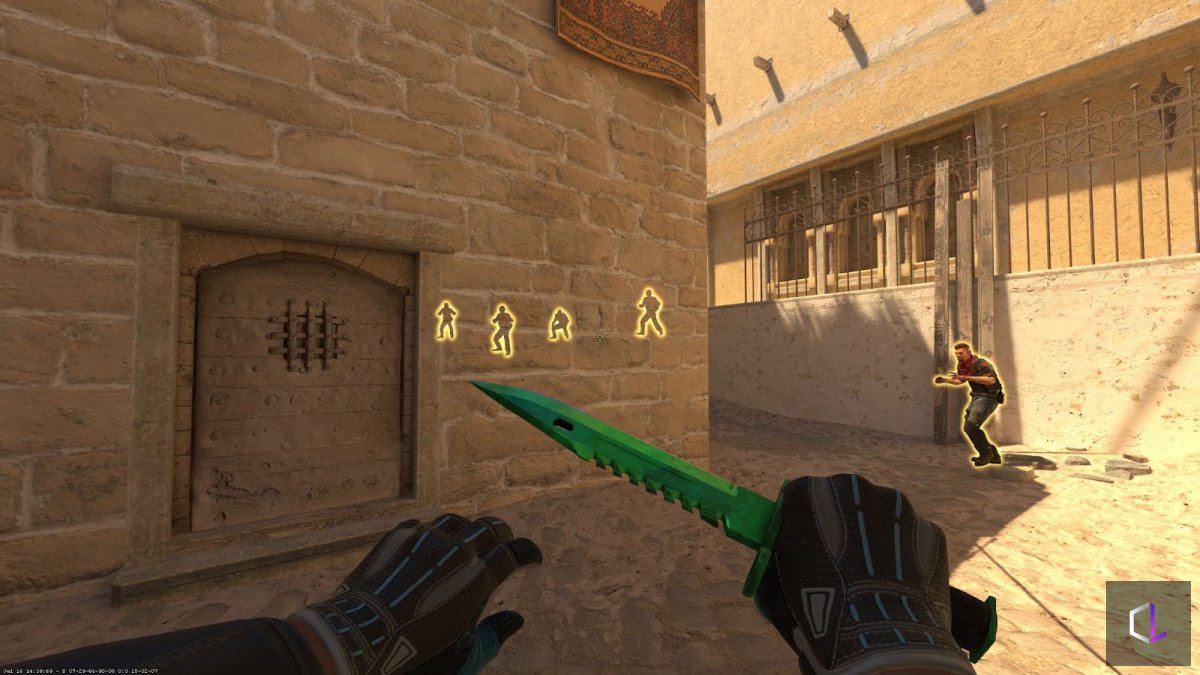
Cheater on a Train: Why Shame No Longer Stops Cheating
Cheating Has Stopped Being Something to Be Ashamed Of
The other day, a video went viral online showing a CS2 player caught with wallhacks turned on right in a train car — in front of random passengers, laptop on his lap, with no attempt to hide or even pretend to play fair. The story circulated as a curiosity, but behind it lies a much more serious question: why is cheating increasingly ceasing to be a shameful act and turning into almost normal behavior?
It used to be that &cheater& was almost a curse word. A person would get banned, people would speak of them with contempt, their reputation would be ruined. Now things are different: clips of cheaters rack up views, commentators joke about it, and the offenders themselves post clips of themselves. Shame as a social brake is working less and less, which means the only real barrier left is technical protection — anti-cheat — and the conscious choice of the player themselves.
Why This Should Concern Parents and Students of Esports Schools
For a teenager who is just starting out on the esports path, the line between &I want to level up faster& and &I'll just install cheats once, just to see& blurs very easily, especially when it looks like harmless entertainment all around rather than a crime against the very essence of the game. It's important to understand a few things:
- A ban isn't the only risk. An account with a cheating history closes the door to any tournaments that verify players, and a reputation in the community takes years to rebuild — if it can be rebuilt at all.
- Cheats destroy the very thing children go into esports for — training reaction, tactical thinking, teamwork. A wallhack doesn't make a player better, it makes them dependent on a crutch that will simply be disabled in any honest environment (training camps, LAN tournaments, academic matches).
- Publicity works against the cheater. It used to be possible to get &caught& only inside the game. Now — literally in a train car, with witnesses holding phones. The digital trace remains forever.
How We Work With This at the Academy
In our CS2 and Dota 2 training, we deliberately build a culture where results matter, but not at any cost. In training sessions, we break down the mechanics of cheats not to show &how it works,& but so students understand how to recognize them in matches — this, by the way, is a real skill that's useful both in demo analysis and in refereeing practice.
We also talk separately about viewer psychology: the fact that a clip of a cheater gets likes and reposts doesn't make the act normal — it works the same way as the hype around any scandalous content. Distinguishing attention from approval is an important media skill for a teenager who spends time in gaming chats and Telegram channels.
Bottom Line
The story with the laptop on the train isn't a funny meme — it's a symptom. As long as part of the community treats cheating as content for jokes rather than as a violation, children develop a distorted idea of fair play. The academy's task is not just to teach aiming and grenade throwing, but to raise players for whom a victory without honor doesn't count as a victory at all. It's precisely these kinds of players who later withstand the pressure of serious tournaments, where what's at stake isn't skins or likes, but reputation for years to come.